

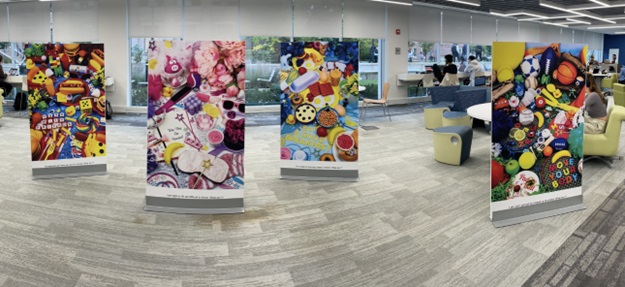
Interior spaces are more than mere inclosures of brick and mortar—they’re canvases that reflect emotions, aspirations, and lived moments. When curated with care, they transcend function and enter the realm of storytelling. This is precisely where interior graphic design makes its quiet yet transformative entrance. By combining visual artistry with interior planning, it subtly enhances the mood and flow of any environment—be it a home, office, retail space, or community centre.
Unlike traditional decoration, this approach goes deeper than fabric swatches and wall paints. It introduces visual motifs, textures, patterns, typography, and forms into the interior landscape, all working in harmony with architecture and purpose. The result isn’t just pleasing to the eye—it invites interaction, sparks memory, and anchors identity.
Crafting Spaces with Emotion, Movement, and Meaning
At its core, graphic design revolves around the visual rhythm of a room. It considers how people move through space, where their eyes land, what stories the walls and furnishings tell, and how all of it affects their behaviour or sense of belonging. A well-designed mural in a public lobby, for example, might invite pause and reflection, while bold geometric patterns in a youth centre could instil energy and creativity.
The fusion of graphic design principles with spatial awareness allows designers to go beyond surface aesthetics. It becomes possible to evoke subtle psychological responses through contrast, symmetry, repetition, or scale. The magic lies in balancing visual clarity with creative unpredictability—elements that elevate a room from functional to unforgettable.
Everyday Applications – Subtle Yet Impactful Transformations
You don’t need vast spaces or elaborate architecture for interior graphic design to work its charm. Even modest rooms can benefit from thoughtfully placed visual elements. Consider a small reading corner enriched by typographic artwork that whispers calm, or a minimalist hallway brought to life through a well-placed illustrative panel. These choices may seem minor, but they contribute to a space’s personality and cohesion.
In corporate environments, this design language becomes a tool of brand storytelling. Without overwhelming the user, interior graphics can reinforce values, convey professionalism, and create a comfortable ambience for both staff and clients. In educational settings, visuals can guide, educate, and motivate—all without the need for verbal instruction.
This quiet integration of purpose and visual storytelling is what makes the discipline both unique and timeless. It doesn’t scream for attention—it simply aligns with human sensibility, and often, that is all a space needs.
Materials, Surfaces, and Expression – Embracing the Physical World
While digital tools play a role in development, the essence of interior graphic design is firmly rooted in the tangible. Designers consider textures, materials, lighting conditions, and how all of these will interact with the graphics once they’re part of the physical world. From textured vinyl to hand-painted murals, from wall decals to printed glass partitions—each choice adds depth and context.
These visual layers speak to the senses, enhancing the tactile and atmospheric qualities of a space. More importantly, they adapt. Whether applied in residential interiors or commercial buildings, the design elements can flex around needs, culture, and the way a room evolves.
Designing with Intent – The Beauty of Less
In a world saturated with visual information, restraint is a virtue. One of the strengths of graphic design lies in its ability to say more with less. A single bold element placed with intent often speaks louder than an overload of decoration. This minimalist philosophy isn’t about austerity—it’s about clarity, purpose, and calm.
By focusing on placement, harmony, and rhythm, designers create experiences rather than spectacles. This considered approach ensures that every stroke, line, or typeface has something to contribute to the story of the space.
Final Thoughts – A Visual Thread Woven into Everyday Life
As we increasingly value how environments shape our moods, habits, and well-being, the influence of interior graphic design becomes harder to ignore. It enriches our surroundings without demanding the spotlight, proving that even the smallest visual touches can carry great emotional weight.
Ultimately, it is not just about beautifying interiors—it’s about aligning them with the people who inhabit them. Whether in homes, shops, clinics, or classrooms, this design philosophy quietly nurtures connection, identity, and clarity. And in doing so, it turns ordinary rooms into spaces that breathe, speak, and remember.
In every corner touched by it, graphic design reveals itself not as decoration but as communication in its most thoughtful form.