

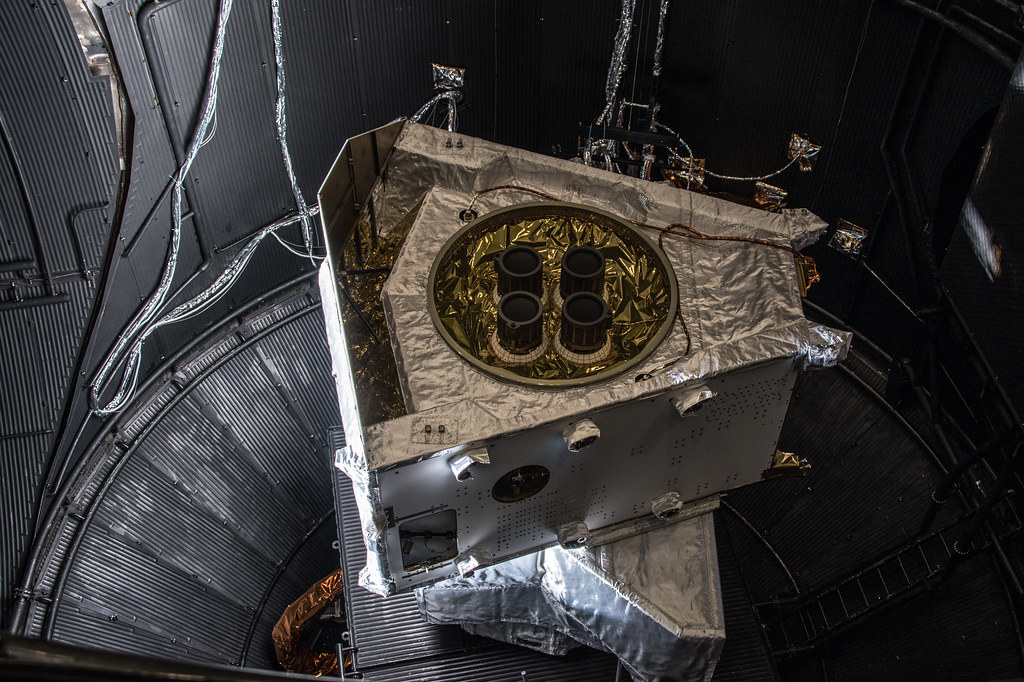
The BepiColombo mission Mercury has successfully arrived in orbit, marking a significant milestone in space exploration. This achievement highlights the collaboration between European and Japanese space agencies.
Overview of the BepiColombo Mission
The BepiColombo mission to Mercury represents a significant achievement in space exploration, marking the second successful endeavor to reach orbit around the planet. Launched on October 20, 2018, this collaborative effort between the European Space Agency (ESA) and the Japan Aerospace Exploration Agency (JAXA) aims to unravel the mysteries of Mercury, the solar system’s innermost planet.
Equipped with advanced scientific instruments, BepiColombo will conduct comprehensive studies of Mercury’s surface, atmosphere, and magnetic field. The mission is composed of two orbiters: the Mercury Planetary Orbiter (MPO) and the Mio spacecraft, which will work in tandem to gather critical data.
As BepiColombo approaches its destination, scientists are eager to analyze the findings that will enhance our understanding of planetary formation and evolution within our solar system.
Significance of Orbiting Mercury
The BepiColombo mission to Mercury marks a significant milestone in space exploration, being only the second mission to successfully enter orbit around the planet. This achievement enhances our understanding of Mercury’s surface, geology, and magnetic field.
Scientists are particularly interested in several key aspects:
- Geological Insights: The mission aims to uncover the mysteries of Mercury’s formation and evolution.
- Magnetic Field Study: BepiColombo will investigate the planet’s weak magnetic field and its implications for planetary science.
- Exosphere Analysis: Understanding Mercury’s thin atmosphere will provide insights into its composition and behavior.
Overall, the BepiColombo mission to Mercury is set to significantly advance our knowledge of the innermost planet in our solar system.
Collaboration Between ESA and JAXA
The BepiColombo mission Mercury represents a landmark collaboration between the European Space Agency (ESA) and the Japan Aerospace Exploration Agency (JAXA). This joint venture exemplifies the strength of international partnerships in advancing space exploration.
Through their combined expertise, ESA and JAXA have developed cutting-edge technology and scientific instruments designed to study Mercury’s unique characteristics. The mission aims to uncover vital information about the planet’s geology, magnetic field, and exosphere.
Both agencies have invested significant resources and manpower into the mission, allowing for a comprehensive approach to understanding one of the solar system’s least explored planets. As the BepiColombo mission Mercury continues to unfold, the collaboration sets a precedent for future exploration efforts beyond Earth.
Future Goals of the Mission
The BepiColombo mission to Mercury has set ambitious future goals following its successful arrival in orbit. As scientists continue to analyze data from the spacecraft, they aim to deepen our understanding of Mercury’s composition and geological history.
Key future objectives include:
- Surface Mapping: Detailed mapping of Mercury’s surface to identify geological features and processes.
- Magnetic Field Study: Investigating the planet’s magnetic field to uncover clues about its core dynamics.
- Exosphere Analysis: Examining Mercury’s thin atmosphere to understand its interactions with solar wind.
These goals will enhance our knowledge of the innermost planet and highlight the BepiColombo mission’s importance in the realm of space exploration.
What This Means for Planetary Science
The successful arrival of the BepiColombo mission at Mercury marks a significant milestone in planetary science. This achievement not only exemplifies the capabilities of international collaboration between ESA and JAXA but also opens new avenues for understanding Mercury’s geological history and its magnetic field.
Researchers anticipate that the mission will provide critical data that could redefine our models of planetary formation and evolution. The findings from BepiColombo could lead to fresh insights about the inner planets and their characteristics.
Furthermore, as the second mission to reach Mercury, BepiColombo enhances our knowledge base, allowing scientists to make direct comparisons with past data. This will deepen our understanding of extreme environments in our solar system and potentially contribute to broader studies of exoplanets.
The BepiColombo mission Mercury has successfully completed its first phase, providing valuable data about the planet’s atmosphere and surface. Scientists are excited to analyze the findings from the BepiColombo mission Mercury, as they could reshape our understanding of terrestrial planets.
By europeanspaceagency via Openverse
References
You might also like
Tesla Traffic Updates: Are They the Best Solution for Drivers? · Heartopia My Little Pony: Is This the Best Collaboration Yet? · Exploring Scientific Progress and Emerging Opportunities in Biomedical Research